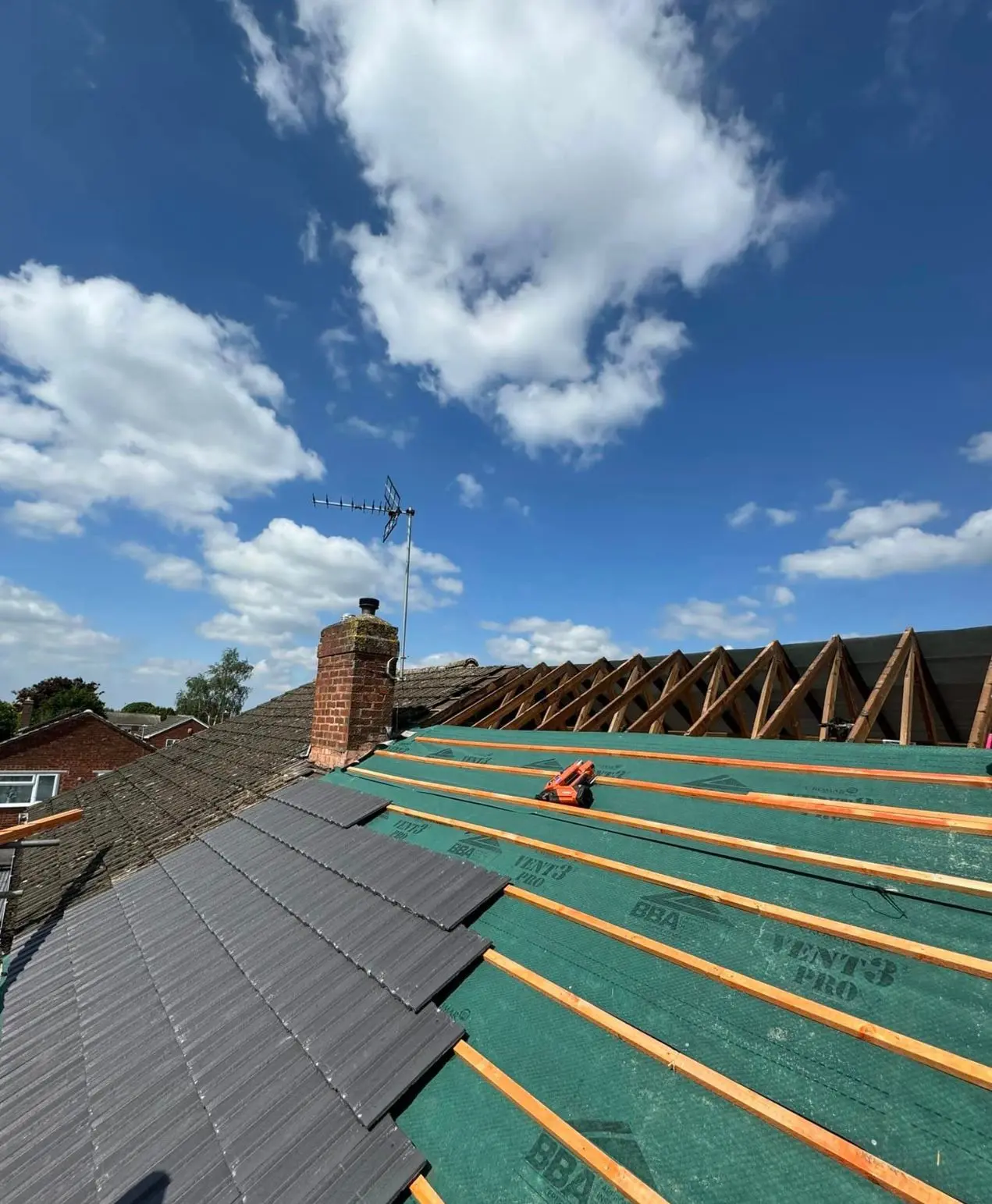
Dublin's wet Atlantic climate puts roofs under pressure all year round. Between driving rain, moss growth, frost heave and the occasional storm, roofs across Dublin — from Rathmines and Ranelagh to Blanchardstown, Tallaght, and out to Meath and Wicklow — are quietly ageing faster than their owners realise. The problem is that roof deterioration never announces itself early enough. By the time water is coming through your ceiling, what started as a straightforward roof repair in Dublin has often grown into something far more expensive.
Most Dublin homeowners don't know whether their roof needs roof repairs or a full replacement until they call a roofing contractor. Here are the seven signs that strongly suggest you need more than just a patch job.
Your Roof Is Over 20–25 Years Old
Most slate and tile roofs in Dublin have a lifespan of 20–30 years under normal conditions. If your roof is approaching or past that range, regular repairs become a false economy — you're spending money fixing individual problems on a structure that's due for full replacement. Age alone isn't a reason to panic, but it's the single most important context for every other sign on this list.
You Can See Daylight Through the Loft
This one is definitive. Go into your attic on a bright day and look up. Any streaks of natural light coming through mean your roof covering has gaps — and if light can get in, so can water. If you're seeing this in multiple spots, the roof deck or tile battens underneath may also be compromised, which typically means replacement rather than repair.
Tiles Are Cracked, Curling or Going Missing
The odd missing slate after a storm is normal and easily handled with a quick roof repair. But if you're regularly finding tiles on the ground across Dublin's older housing stock — common in 1970s and 80s estates in Blanchardstown, Clondalkin, and Tallaght — or if a large portion of the roof surface is visibly cracked or lifting, the issue is systemic. This points to deteriorating tile battens or failed fixings. Replacing individual tiles on an ageing roof is often a short-term fix for a long-term problem.
The Roof Is Visibly Sagging
A healthy roof should have straight, clean lines. If you look at the ridge line or roof slope and it appears to dip, bow or sag in any area, this indicates structural failure — either in the rafters, the roof deck, or both. This is not a repair job. A sagging roof is a safety issue and needs professional assessment immediately. In almost every case, this means full replacement.
You're Finding Granules in Your Gutters
This sign is specific to properties with felt or asphalt-based flat roof sections or older torch-on coverings. If you're cleaning your gutters and finding a sandy, gritty residue that looks like coarse sand or gravel, those are the protective granules eroding off your flat roof membrane. Once the granule layer is gone, the membrane underneath degrades rapidly under UV exposure. This is a clear sign the flat roof section needs replacing.
Heavy Moss and Algae Growth
Moss is common on Dublin roofs and, on its own, isn't catastrophic. But heavy, established moss growth causes real damage over time — it holds moisture against tiles, forces its way under the surface, and accelerates freeze-thaw cracking. This is particularly common on north-facing roof slopes in Rathmines, Ranelagh, and along the Wicklow and Meath coastline where damp conditions persist year-round. If moss has been allowed to grow unchecked for years, the tiles beneath are often already weakened. Cleaning alone won't fix structurally compromised tiles; they'll need replacement once the moss is cleared and the full damage is visible.
Your Heating Bills Have Risen Without Explanation
A deteriorating roof loses its insulating properties. Gaps, failed underlays and compromised tile coverage all allow warm air to escape and cold, damp air to enter the roof space. If your energy bills have crept up steadily over the last few years without an obvious cause, a failing roof — combined with poor or compressed attic insulation — is frequently the culprit. A full roof replacement combined with new attic insulation can make a significant difference to a home's heat retention.
Roof Repairs Dublin vs. Full Replacement: How to Decide
A single cracked tile, a small chimney repointing job, or a loose flashing — these are roof repairs. They're isolated issues on an otherwise sound roof and are worth fixing on their own. Most Dublin homeowners will only ever need repairs throughout the life of their home.
Full roof replacement in Dublin makes more sense when: the roof is over 20 years old, multiple signs from this list apply simultaneously, roof repair call-outs are needed more frequently year on year, or the underlying structure (battens, deck, felt underlay) is compromised.
The honest answer is that you need a professional to look at it. A good roofing contractor will tell you clearly which category your roof falls into — and won't push replacement if a roof repair in Dublin is the right call. At Hi Performance Roofing, we've been giving homeowners across Dublin, Meath, and Wicklow straight answers on this question since 1992.