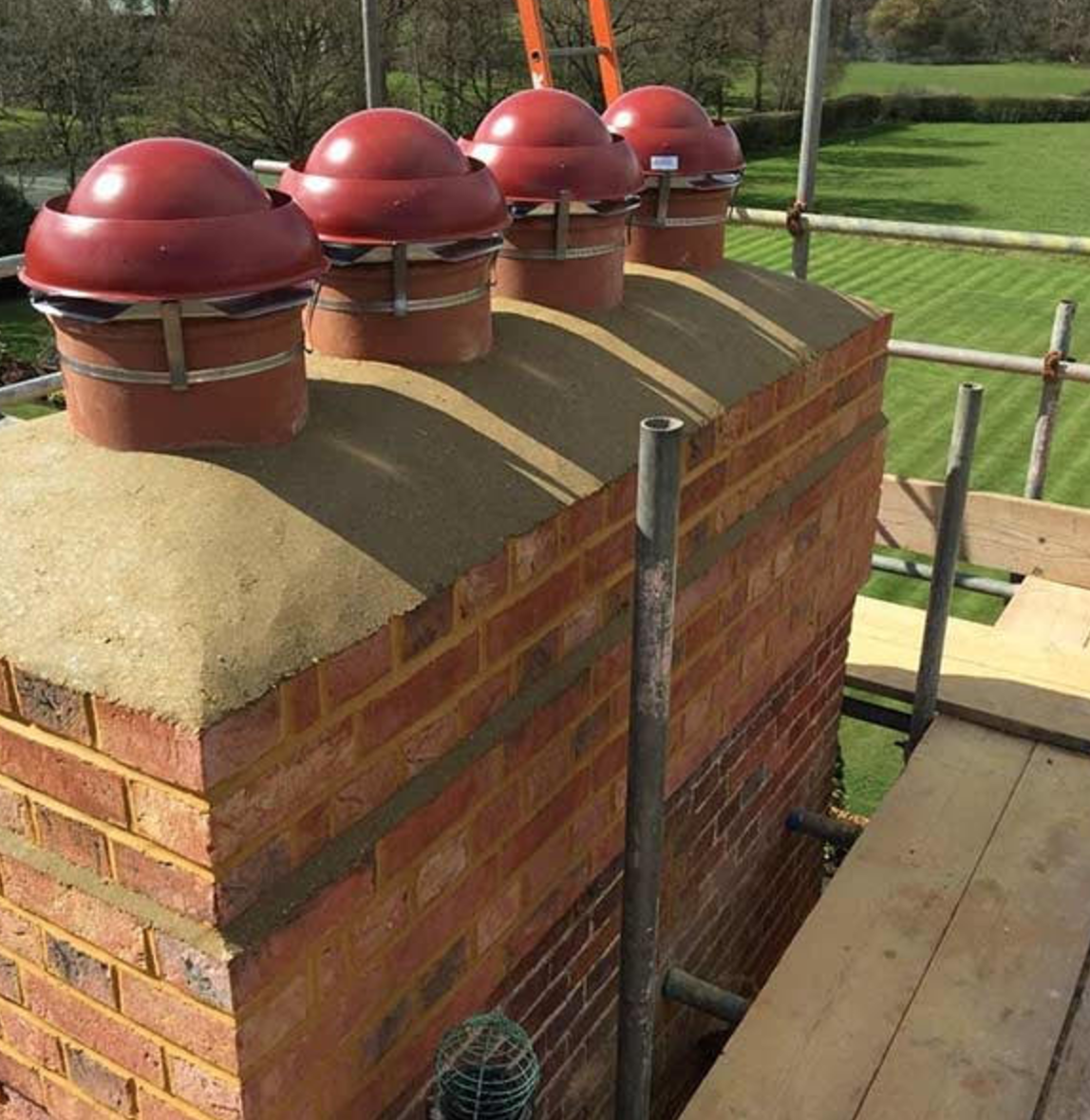
Dublin's chimneys take a battering. Exposed on all sides to driving Atlantic rain, frost cycles through winter, and years of heat and cold expanding and contracting the brickwork — a chimney stack is one of the hardest-working parts of any home. Yet most Dublin homeowners only notice a chimney problem when water starts coming through a ceiling or a damp patch appears on an upstairs wall.
The trouble is that chimney deterioration is gradual and mostly invisible from ground level. By the time you can clearly see the problem, the damage has usually been building for months or years. These are the five warning signs that your Dublin chimney needs professional attention before it becomes a much larger job.
Crumbling or Missing Mortar Joints
The mortar pointing between chimney bricks is the first thing to go. It's softer than the brick itself and weathers faster — especially on exposed Dublin rooftops where wind and rain hit from every direction. Once pointing begins to crack or crumble, water gets into the joints, freezes in winter, and forces the bricks apart. Left unaddressed, a repointing job becomes a partial or full chimney rebuild. If you can see gaps in the mortar from the ground, call a roofer before the next frost season arrives.
Spalling or Flaking Brickwork
Spalling is when the face of the brick itself starts to flake, chip or break away. It happens when water gets into the brick, freezes, and forces the surface off. It's common on older Dublin housing stock — particularly Victorian and Edwardian terraces across Rathmines, Ranelagh, Phibsborough and Stoneybatter, where original lime-pointed brickwork has sometimes been repointed with hard cement that traps moisture inside the brick rather than letting it escape. Spalling bricks can't be repointed back to strength — they need to be replaced, which means tackling it sooner rather than allowing it to spread across the stack.
Damaged or Lifting Chimney Flashing
The flashing is the lead or metal seal where your chimney meets the roof surface. It's designed to stop water tracking down the join between two surfaces that move independently — the chimney stack and the roof tiles. Over time, flashing can lift, crack, or pull away from the mortar chase it's bedded into. When it does, water runs straight down behind the plaster on your chimney breast wall. If you're seeing damp patches on an interior wall near a chimney — particularly after heavy rain — failed flashing is one of the most common causes. It's a straightforward repair when caught early, but if water has been tracking in for an extended period the internal damage can be significant.
A Visibly Leaning or Cracked Stack
A chimney stack that leans, bulges, or has visible cracks running through the brickwork is a structural issue, not a cosmetic one. This level of damage typically points to failed internal ties, serious mortar deterioration, or — in older properties — foundation movement at the base of the stack. A leaning chimney is a safety risk as well as a water ingress risk. If you can see it from the ground, it needs to be assessed immediately. In many cases this means the stack needs to be taken down and rebuilt, which is standard practice on Dublin's older housing and something Hi Performance Roofing carry out regularly.
Damp Patches or Staining Inside the House
Interior damp near a chimney is often the first sign homeowners notice — but it's rarely the beginning of the problem. By the time water has tracked through brickwork or flashing and appeared on an internal wall or ceiling, the entry point has usually been open for some time. Common locations are the chimney breast in upstairs bedrooms, the ceiling directly below the stack, and the wall around a fireplace surround. Don't mistake this for rising damp — chimney-related damp typically appears higher up and worsens after rain. The fix is always on the roof, not on the interior wall.
When to Repair vs. When to Remove
Most chimneys in Dublin can be repaired rather than removed. Repointing, flashing replacement, and individual brick replacement are all standard work that extends the life of an existing stack significantly. A full chimney rebuild is needed when the structural integrity of the stack is compromised — typically when the brickwork is beyond repointing or the stack has moved.
For chimneys that are no longer in use — common in Dublin's older housing stock where open fires have been replaced — capping and weatherproofing the pot is a good option. It removes the maintenance burden entirely while keeping the chimney breast intact inside.
The only way to know exactly what you're dealing with is to have someone on the roof who can see it properly. A ground-level inspection tells you something is wrong, but not how bad it is or what the right fix looks like. At Hi Performance Roofing, chimney work is one of the most common jobs we carry out across Dublin, Meath, and Wicklow. We'll give you a straight answer on what it needs.